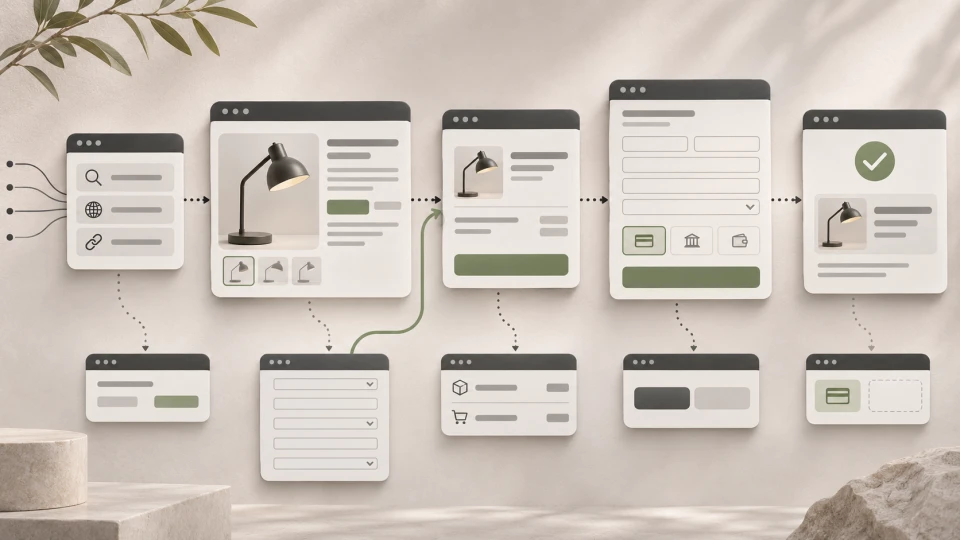
What Is an ERP System?

ERP, or Enterprise Resource Planning, is a system for managing a company's resources and core processes. It helps manage interconnected information about orders, warehouse, finance, purchasing, production and other business processes in one shared environment.
Simply put, ERP helps a company avoid a situation where orders sit in one system, warehouse data in another, and documents and financial information somewhere else.
The main value of ERP shows when several business processes need the same data and information between departments or systems starts having to be re-entered manually on a regular basis.
~ 4min
28/10/2026
What does an ERP system usually manage?
Depending on the company's activities, ERP can help manage:
- orders;
- warehouse stock levels and product movement;
- purchasing;
- financial and accounting data;
- documents;
- delivery and fulfilment processes;
- production processes;
- product and pricing information.
Not every company needs every ERP module. What matters is understanding which processes in a particular company are interconnected and where the most manual work occurs.
When does a company really need an ERP system?
ERP is not a mandatory next step for every small company.
It becomes valuable when processes managed in separate tools start causing duplicate work, data mismatches or a lack of visibility.
| Situation | Why ERP may become necessary |
|---|---|
| Orders, warehouse and accounting live in separate systems | Data has to be re-entered regularly and mismatches start to appear |
| Several departments are involved in order fulfilment | A unified process and a clear status are needed |
| There are several warehouses, many products or complex pricing logic | A single main source of data is needed |
| Management lacks a unified operational view | ERP can bring together order, stock, document and financial information |
Company size is not what matters most. For a small company with a complex flow of products, warehouse and orders, ERP can be more valuable than for a larger service company with a simple process.
ERP vs CRM: what is the difference?
CRM and ERP handle different parts of a company's processes.
| CRM | ERP |
|---|---|
| Leads, contacts and deals | Orders, stock and documents |
| Sales process | Operational fulfilment process |
| Customer communication | Finance and resource management |
| Sales activities | Warehouse, purchasing or production |
Put simply, CRM focuses more on customers and sales, while ERP focuses on what happens in the company after or alongside the sale.
In many companies, the two systems work together.
Read more: What is a CRM system?
How does ERP connect to a website or online store?
ERP is very often integrated with e-commerce.
For example:
ERP price and stock level → online store → order → ERP → warehouse → fulfilment
ERP can be the main source of data for product prices or warehouse stock levels, while the online store sends the customer's order to the ERP.
This helps avoid a situation where prices, stock levels or order data have to be maintained manually in several places.
The integration logic depends on the specific company's process and the capabilities of the systems used. The first step is to determine which system holds the up-to-date data and in which direction it needs to flow.
Read more about data flow between systems in What Is Business Systems Integration and When Do You Need It?.
Frequently asked questions
Is ERP only for large companies?
No. The need for ERP is determined more by process complexity than by the number of employees. Even a small company with many orders, products or warehouse movements can benefit from ERP.
Does ERP replace CRM?
Usually not. CRM mainly manages customers and the sales process, while ERP focuses more on operational, financial and resource processes. Many companies use both systems together.
Can an online store be connected to ERP?
Yes, if the systems used provide the necessary integration options. For example, orders, product information, prices, stock levels or statuses can be synchronised.
When does a small company not need ERP yet?
If there are few orders, the process is simple, the team manages data well in existing tools and information doesn't regularly have to be re-entered between several systems, implementing ERP may be premature.
It is more important to assess process complexity and data flow than company size.
When is it worth implementing ERP?
An ERP system becomes valuable when orders, warehouse, documents and other interconnected processes can no longer be managed reliably or efficiently in separate tools.
A small company may not need ERP straight away. What matters most is process complexity and data flow, not company size.
Read more: How to connect your website to a CRM or ERP and reduce manual work?
Latest articles
7 E-commerce Automations That Help Win Back Customers and Increase Sales
What Is WooCommerce in E-commerce Development?
E-commerce SEO: A Practical Guide